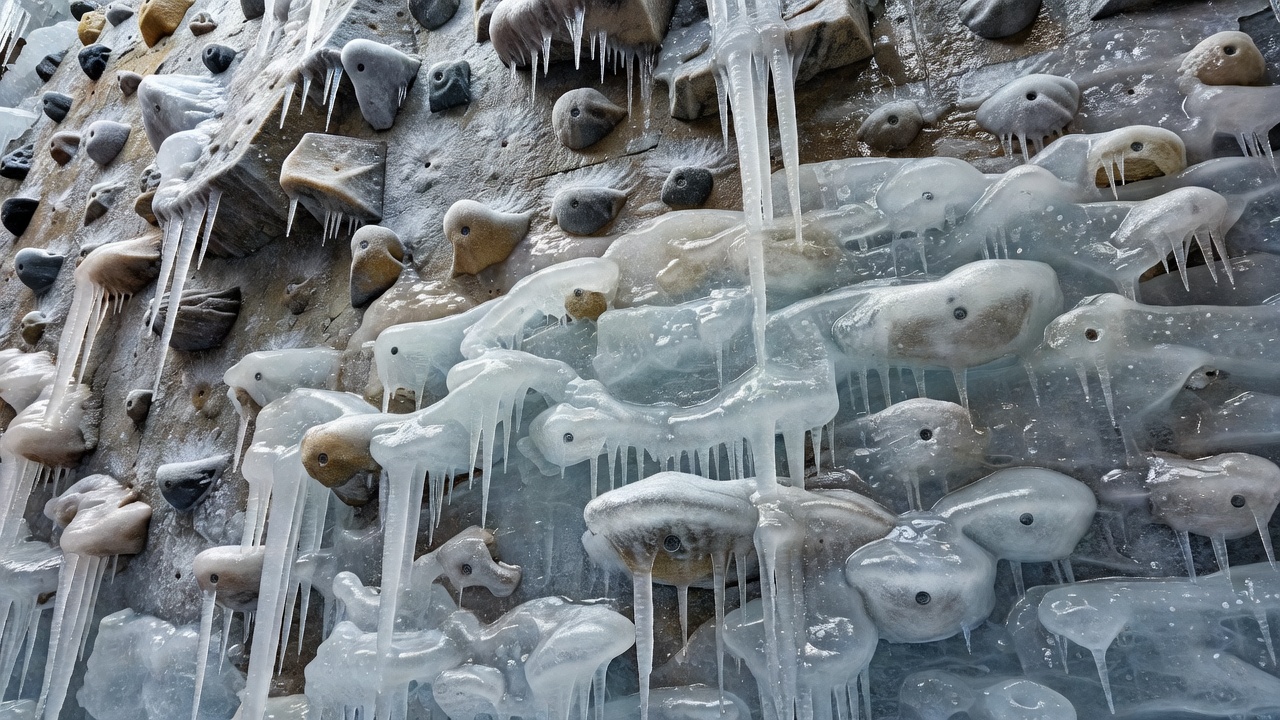
Start with what is controlled
A technical ice training facility may use refrigeration, seasonal outdoor freezing or a combination of sheltered structure and managed water delivery. These arrangements control different parts of the environment. Indoor refrigeration can moderate air temperature, but traffic, ventilation and local heat sources still affect the surface. Outdoor ice farming depends on weather windows and exposes the structure to sun, wind and changing precipitation.
Ouray Ice Park in Colorado is a useful real-world reference for managed outdoor ice, not an indoor center. Its setting illustrates why a human-managed water supply does not eliminate environmental variability. Rabenstein in South Tyrol offers another established ice-climbing reference. Neither name should be read as a recommendation, a current opening notice or a claim that its operating model applies everywhere.
For comparison, record the facility category before comparing height, steepness or advertised training capacity. Otherwise, apparently similar walls may represent very different constraints.
Temperature is not a verdict
Ice behavior reflects more than a single thermometer reading. Formation history, temperature changes, entrained air, water flow and previous disturbance can produce different local characteristics. A room display describes a measured condition at a particular sensor; it does not characterize every part of the wall.
Refrigeration settings, ambient air temperature and observed surface condition are related but distinct records. Facility descriptions should keep them separate. Claims such as “consistent ice” need context: consistent across which zones, during which operating period, and under what inspection process?
For visitors, the appropriate response to uncertainty is to consult the operator and obey restrictions. This dossier does not provide a visual checklist that can establish whether ice is climbable. Brittle, wet or heavily worked appearances can prompt questions, but remote interpretation is not a substitute for competent assessment.
Follow the hidden dependencies
Water delivery influences where material accumulates. Drainage influences where meltwater travels. The supporting structure, its environment and the accumulated ice interact in ways that require competent design and operation. A wall cutaway can explain these dependencies without supplying engineering dimensions or structural approval.
Ask whether the facility separates public circulation from maintenance work and falling-material exposure. Equipment storage, drainage channels and access gates should not be treated as decorative details. They are part of the operating environment that makes planned training possible.
Planners should also distinguish the climbing surface from the underlying load-bearing system. Visible ice does not reveal the condition of concealed components. Design loads, inspection intervals and replacement decisions belong with qualified specialists using the applicable technical and legal requirements.
Traffic changes the task
Repeated use modifies a surface. Tool traffic and crampon traffic may change both the available movement choices and the maintenance burden. Two sessions on the same named line need not present the same task, even if the nominal angle and height are unchanged.
This matters when instructors compare performances. A learner’s outcome may reflect a changed surface as well as learning or fatigue. Recording the broad session context helps prevent overconfident conclusions. It is more useful to describe a supervised task and its conditions than to assume a wall label guarantees repeatability.
Operators may close sectors for maintenance or because conditions no longer match the planned use. A closure is an operating decision, not an inconvenience that visitors should attempt to reinterpret. Current instructions take precedence over promotional photographs and previous visits.
Ask how a surface returns to use
- ObservationWho records changing conditions and reports concerns during public sessions?
- RestrictionWho can close a sector, and how are users kept out while work is underway?
- MaintenanceHow are tasks assigned to competent personnel without exposing other users?
- ReopeningWho authorizes access, and how is that decision communicated to instructors and visitors?
This is a sequence of governance questions, not a maintenance method. Actual procedures depend on the facility, equipment, engineered design and local requirements. Public information need not disclose sensitive technical details to make responsibility and access rules understandable.
Compare evidence, not adjectives
| Claim | Useful clarification | What it does not establish |
|---|---|---|
| Refrigerated wall | Which environmental variables are monitored? | Uniform ice or unrestricted availability |
| Managed outdoor ice | How are seasonal access decisions communicated? | Independence from weather |
| Regular maintenance | Who controls closures and reopening? | A guarantee for every session |
| Professional training | Which objectives, supervision and entry requirements apply? | Mountain readiness or certification |
For equipment context, the UIAA publishes mountaineering safety standards, and manufacturers such as Petzl, Black Diamond and Grivel publish product-specific instructions. Those documents address defined equipment questions; they do not certify an ice wall merely because their products appear there. Keep material observations, equipment compliance and facility authorization as separate evidence streams.