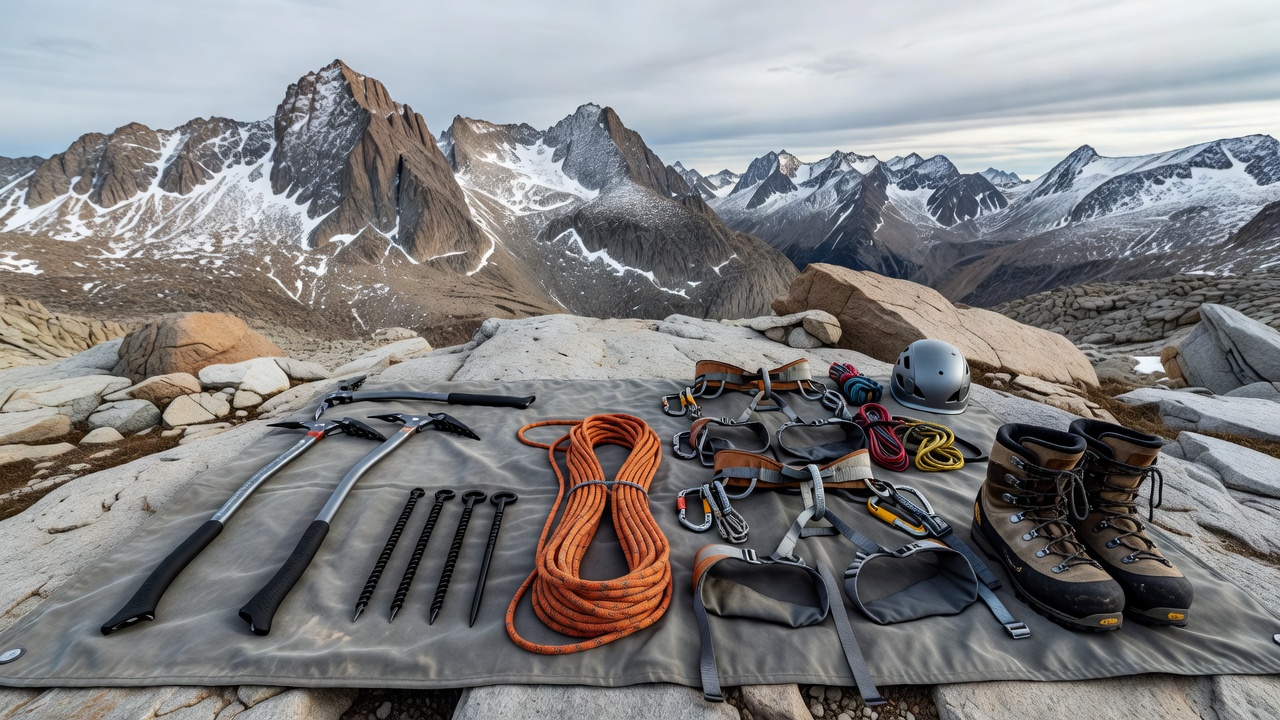
A preparation area has a job
Off-wall space allows people to prepare without occupying a climbing line or obstructing circulation. Its usefulness depends on layout, occupancy and rules, not merely floor area. A room advertised as a training zone may also serve as a corridor, equipment store or briefing area; competing uses can reduce its practical value.
For facility planners, distinguish clean circulation from activities involving sharp tools, suspended loads or moving equipment. Participants need to know which activities are permitted in each area. A generic fitness room should not be assumed to support ice-tool exercises or crampon use.
A clear relationship between the reception, changing area, preparation space and ice access can reduce confusion. It does not remove the need for supervision or facility-specific risk assessment.
Support preparation, do not prescribe it
A warmer supporting space can make briefing, equipment familiarization and individually appropriate preparation easier to organize. The facility can provide a usable environment without implying that one standard routine suits every participant. Experience, health, recent training and the planned session all affect what is appropriate.
This dossier does not specify repetitions, hanging loads, stretching durations or intensity targets. Ice climbing combines demands that can be unfamiliar even to experienced gym climbers. An exercise that appears simple may impose substantial load when performed with specialized equipment.
Ask who designs the preparation component and whether the instructor knows the participant’s relevant limitations. Anyone managing pain, injury or a health condition should seek appropriate clinical advice rather than adapt an online facility description into a rehabilitation plan.
Define the permitted use
A purpose-built station may support familiarization or a narrowly defined training objective. Its value depends on intended use, installation, inspection and instruction. A beam, pull-up bar or climbing hold should never be assumed suitable for an ice tool simply because a tool can physically contact it.
Facility information should distinguish movement practice from strength testing and explain which equipment is allowed. Different tool handles, head designs and attachments can create different interactions with a station. Product resemblance is not evidence of compatibility.
Instructors and planners should consult the relevant manufacturer documentation. CAMP, DMM and Edelrid are established equipment manufacturers whose materials illustrate the importance of product-specific information. Mentioning them does not imply that any product they make is approved for a particular facility or exercise.
Measure the task you actually did
A useful session record can describe the objective, broad conditions, equipment category, duration of participation and the participant’s own response. It should not imply that a single number captures technical competence. Time on a wall may include instruction, waiting, recovery and active movement in very different proportions.
Keep comparisons anchored to context. An apparent improvement may reflect a changed surface, a different task or more familiar equipment. Likewise, a difficult session is not automatically evidence of lost ability. An instructor can interpret those observations more responsibly when the surrounding conditions are recorded.
Records should remain proportionate. Do not collect health details, photographs or other participants’ names without a legitimate reason and appropriate agreement. More data does not automatically produce better coaching.
Evaluate the supporting environment
| Space | Useful question | Boundary to preserve |
|---|---|---|
| Preparation room | Can the group prepare without blocking access? | Do not assume every exercise is permitted |
| Dry practice station | What is its stated intended use? | No improvised loading or tool use |
| Recovery area | Is it separated from falling material and traffic? | Comfort does not establish readiness to resume |
| Equipment return | How are wet or suspect items handled? | Storage is not an inspection process |
Make room for decisions
A place to step away from the immediate activity helps instructors and participants discuss what happened and decide what comes next. Seating, lighting and clear communication can support that conversation. They are not substitutes for an appropriate staffing model or an emergency plan.
Cold, wet clothing and fatigue can influence the practical experience of a session. Facilities should explain the clothing and equipment expectations relevant to their environment. Visitors should ask before arrival rather than infer conditions from indoor photographs.
Returning to the wall should follow the instructor’s judgment, the operator’s rules and the participant’s condition. This page offers no threshold that can determine whether someone should continue exercising or climbing.
Do not confuse a gym with the objective
Strength and conditioning can support climbing preparation, but the relationship is not automatic. A well-equipped training room does not establish that a program is suitable, and improved performance on one station does not demonstrate outdoor decision-making ability.
For technical climbers, the useful question is how an off-wall component relates to a defined objective and how its effects will be interpreted. For instructors, it is whether the task is appropriate to the person and the session. For planners, it is whether the space and operating rules genuinely support the proposed use.
The American College of Sports Medicine is an established source of general exercise-science information. Its broad resources do not constitute an individualized ice-climbing program. For personal programming, use appropriately qualified support that can assess the individual and the intended activity.